
Amid the restructuring of the global aluminum industrial supply chain, Guinea has firmly grasped the lifeline of the global aluminum industry.
Endowed with 7.4 billion tons of exploitable bauxite reserves, premium low-silicon and high-alumina ore with alumina content of 45%-62%, as well as natural advantages of shallow burial and easy open-pit mining, Guinea dominates over 70% of the global seaborne bauxite trade market. Notably, 74% of China’s imported bauxite comes from Guinea, making it a core pillar of raw material supply for China’s aluminum industry.
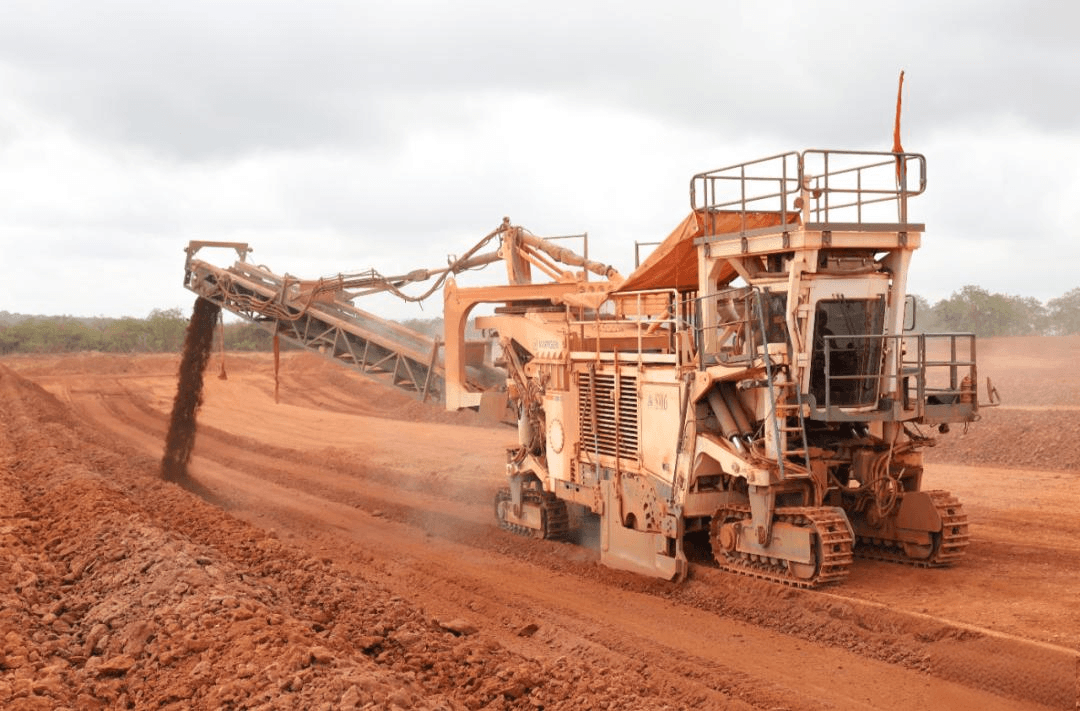
With the full implementation of Guinea’s Simandou 2040 National Plan, the total investment over 15 years reaches 200 billion US dollars, with the first phase (2025-2030) hitting 65 billion US dollars, completely reshaping the logic of local industrial development.
The Guinean government has vigorously promoted new resource nationalism policies. By reclaiming idle mining rights, controlling output to stabilize prices, and enforcing localized processing, it explicitly prohibits the simple export of crude ore, forcing bauxite to be locally processed into alumina, electrolytic aluminum and aluminum ingots.
Leading Chinese enterprises including Aluminum Corporation of China(CHINALCO), SMB Winning Consortium and SPIC have taken the lead in layout, launching 1.2 million tons annual output alumina projects one after another, and initiating the whole industrial chain localization of “bauxite — alumina — electrolytic aluminum — aluminum ingot”. Guinea is rapidly transforming from a single ore exporter into a core aluminum manufacturing base in Africa.
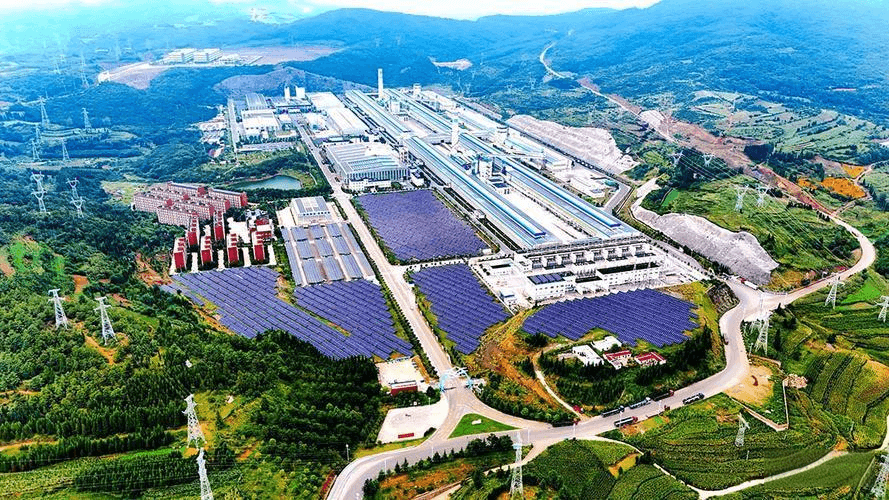
From the perspective of industrial conversion logic, once bauxite is smelted into alumina, putting all capacity into electrolytic aluminum production will form a huge industrial scale.
According to industrial theoretical calculation, 1.2 million tons of alumina can theoretically produce about 635,300 tons of electrolytic aluminum. After deducting industrial electrolysis loss and casting burning loss, the actual stable output of aluminum ingots reaches 610,000 to 615,000 tons.
An aluminum ingot production line with an annual output of 600,000 tons needs to consume about 300,000 tons of prebaked anodes and 15,000 tons of cathode carbon blocks every year. As the core consumable and key component of electrolytic aluminum production, the supply capacity and quality control of prebaked anodes directly determine the stable operation, cost reduction and efficiency improvement of local electrolytic aluminum projects in Guinea.
In the production process of prebaked anodes, the preheating kneading and forming system is an indispensable core equipment, covering the whole process of dry material proportioning, constant temperature kneading, paste modification and vibration forming.
It mainly functions to mix carbon aggregates such as petroleum coke and pitch coke with pitch binder, completing shearing, kneading and infiltration fusion under precise temperature control to form homogeneous plastic paste, which is then precisely formed into standard anode blocks.
The process accuracy of kneading and forming directly affects the bulk density, electrical conductivity and mechanical strength of anodes, and further influences the energy consumption, current efficiency and product qualification rate of electrolytic aluminum production, serving as the fundamental guarantee for efficient and low-consumption operation of electrolytic aluminum production lines.
At present, Guinea faces prominent shortcomings in supporting facilities for its local aluminum industry. While alumina and electrolytic aluminum capacities are put into operation at an accelerated pace, supporting capacities such as prebaked anodes and cathode carbon blocks are seriously insufficient, and industrial chain supporting sectors including refractory materials, caustic soda and carbon forming equipment are almost blank.
With the official signing and launch of CHINALCO’s 1.2 million-ton alumina project, and the accelerated construction of alumina projects of SMB and SPIC, a large number of electrolytic aluminum production lines will be launched intensively, bringing an explosive demand for high-performance and large-scale kneading & forming systems.
Targeting the development demand of Guinea’s localized aluminum industry, the professional preheating kneading & forming system has multiple core advantages such as adaptability to large-scale capacity, energy saving and consumption reduction, stable quality and compatibility with overseas localized operation and maintenance.
HWAPENG High efficient Preheating and Kneading System and Forming system HP-EVC800 Extrusion Vibrocompactor Adopting precise temperature control technology with temperature measurement error controlled within ±2℃, the equipment can stably realize integrated operation of dry material preheating, high-intensity kneading and cooling forming;
It can effectively increase the anode finished product rate by 2%-5%, reduce pitch consumption by more than 2%, raise the formed bulk density by 0.02 units, and greatly cut down electrolysis production loss and operating costs.
Meanwhile, the modular design adapts to installation and commissioning of overseas projects, and the sealed structure prevents leakage of dust and pitch fume, complying with Guinea’s environmental protection regulations and perfectly meeting the supporting demand for anode carbon blocks of aluminum ingot production lines with annual output of 600,000 tons and above.
Looking ahead, driven by Guinea’s policies and the full industrial chain layout of Chinese enterprises, the local deep processing of bauxite has become an irreversible trend, and the capacity of electrolytic aluminum and aluminum ingots will continue to expand.
As the core equipment for prebaked anode production, the preheating kneading & forming system will fill the supporting gap of Guinea’s aluminum industry, become a key entry point to layout the African aluminum industry track and share the dividends of localized processing, and help Chinese enterprises improve the closed-loop of the whole industrial chain of “resources + infrastructure + processing + supporting facilities”, further exploring the trillion-level blue ocean market of aluminum industry in Guinea.
Post time: May-25-2026